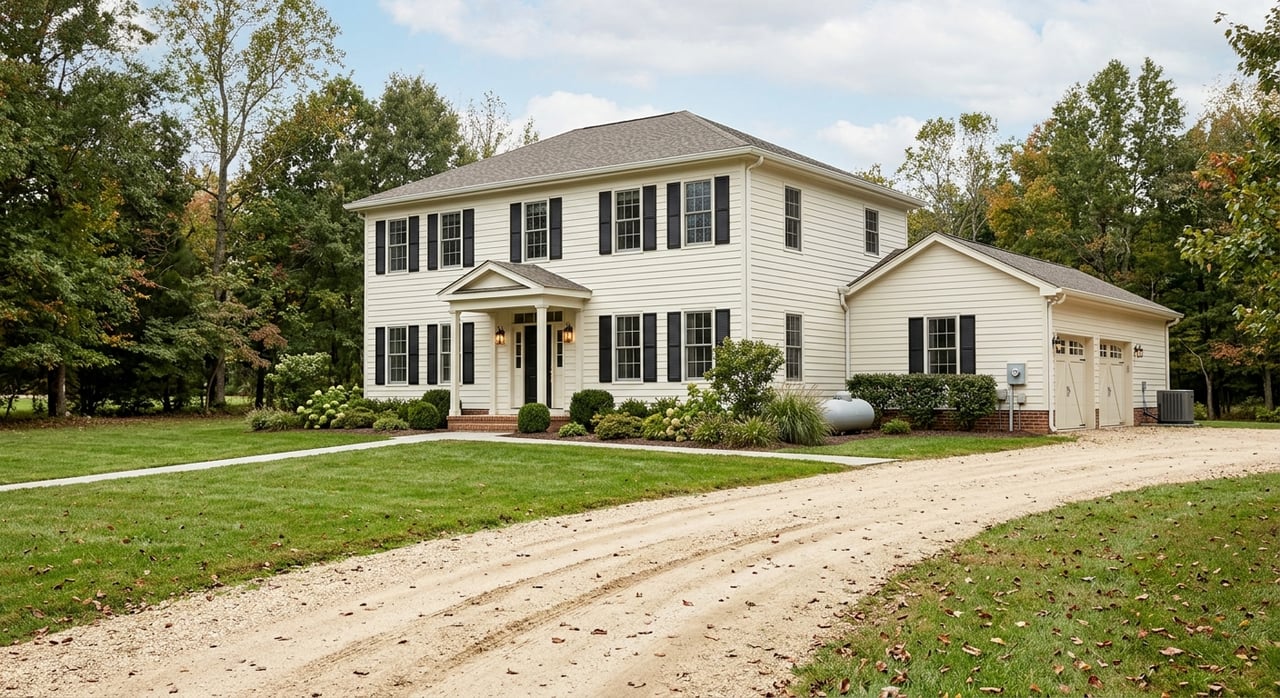
If you picture rural homeownership as wide-open land and total simplicity, Byhalia may surprise you. Living here can mean more space and a slower pace, but it can also mean more driving, more utility questions, and more property-specific homework before you buy. If you are considering a home in Byhalia, this guide will help you understand what day-to-day ownership really looks like. Let’s dive in.
Byhalia Feels Rural, But Connected
Byhalia sits in a unique spot in Marshall County. It has the feel of a small town with room to spread out, yet it stays closely tied to the broader Memphis metro through major highways.
Local planning materials identify Highway 78, future I-22, and Mississippi 309 as a major intersection, with I-269 adding another key connection. In practical terms, that means you can enjoy a quieter home base while still relying on regional routes for work, shopping, and services.
This is not a dense suburban grid where everything sits a few turns away. The overall pattern is more rural and road-oriented, which shapes nearly every part of daily life from commuting to errands to utility access.
Housing in Byhalia Is Varied
A lot of buyers assume a rural market means one kind of property. In Byhalia, the housing mix is broader than that.
Census-based data shows a small town footprint of about 7.1 square miles, with 713 housing units and 630 households. About 54% of occupied homes are owner-occupied, and 63% of the housing stock is single-unit, which supports the town’s low-density feel.
You may find older homes closer to the historic core, larger parcels on the outskirts, manufactured homes on individual lots, and rural residential tracts within the same broader market area. That variety can be a real advantage if you want flexibility in style, lot size, or setup.
Older Core and Newer Rural Patterns
Byhalia is not just a newer growth area. Town history and planning materials point to an older center with buildings dating roughly from 1884 to 1920, along with long-standing homes and churches that remain part of the community’s identity.
That matters because your home search may include very different property types. One showing could be a home near town with a more traditional layout, while the next could be acreage with a very different maintenance routine.
Acreage Is Part of the Search
Byhalia’s development code makes it clear that low-density living is part of the local pattern. The Rural Residential category is intended for single-family lots of at least one acre, and agricultural lots are also set at at least one acre.
Active market snapshots in the area also show homes on 1.99-acre, 3.62-acre, and 24-acre lots. Those examples do not define the whole market, but they do show that land-heavy properties are a normal part of the buying experience here.
More Land Often Means More Responsibility
The biggest appeal of rural homeownership is usually easy to understand. You may get more elbow room, more privacy, and more flexibility in how your property functions.
The tradeoff is that you often take on more of the day-to-day responsibility yourself. In Byhalia, that can include verifying utility service, understanding lot conditions, and planning for ongoing upkeep that may feel different from a typical suburban subdivision.
Utility Setup Can Vary by Property
Inside Byhalia city limits, the town provides gas, water, sewer, and garbage service. The town’s utility information also shows different deposit structures outside the city limits and separately references a Creekwood subdivision sewer connection.
That is a strong reminder not to assume every property works the same way. Two homes in the same general area may have very different utility arrangements, so it is smart to confirm service details early in the buying process.
Well and Septic May Be Part of Ownership
Byhalia’s development code notes that rural residential development typically occurs where municipal-scale services are unavailable. It also says public water and sanitary sewer are preferred but not required in that category.
For some buyers, that means a home may depend on a private well, septic system, or another limited utility setup rather than full town service. If you are used to a standard in-town setup, this is one of the biggest changes to understand before you buy.
For rural and semi-rural homes, septic systems are commonly used where public sewer is not available. Private wells also require ongoing attention, including regular testing, so the maintenance side of ownership can become a normal part of life instead of an occasional exception.
Electric Service Reflects the Rural Setting
Electric service in this part of Marshall County is cooperative-based. Northcentral Electric Cooperative serves the western side of the county and has headquarters in Byhalia.
That does not mean service is unusual, but it does reflect the area’s rural and semi-rural infrastructure pattern. For homeowners, it can mean a little more coordination around service connections or line-related questions than you might expect in a denser in-town neighborhood.
Manufactured Homes Are Part of the Market
In some markets, buyers are surprised to learn that manufactured homes are part of the local housing mix. In Byhalia, they are not an outlier.
The town’s development code allows manufactured homes on individual lots if they meet roof, foundation, and siding standards. That means they are part of the normal landscape and may come up during your search alongside site-built homes and acreage properties.
This matters because it expands your options, especially if your priorities include land, budget flexibility, or a simpler path to homeownership. It also means comparable properties can vary quite a bit, which makes local guidance especially important.
Commuting Is a Big Part of the Lifestyle
If you are thinking about Byhalia, it helps to be honest about how you want your days to work. This is generally a better fit for drivers than for buyers looking for a highly walkable suburban routine.
The local development plan points to strong highway access as a defining feature, and both older planning analysis and current census-based travel data support the idea that commuting plays a major role in town life. The plan reported that most workers were employed outside Byhalia, while a current ACS-based profile shows a mean travel time to work of 21.2 minutes.
That commute pattern helps explain the appeal. You can live in a smaller-town setting while staying connected to employment and services across the larger Memphis-area orbit.
Daily Errands May Take More Planning
In a more rural setting, convenience looks different. You may not have the same dense pattern of nearby retail, services, and stop-on-the-way options that many buyers associate with suburban living.
For some people, that is part of the charm. For others, it means taking a more intentional approach to grocery runs, home maintenance errands, and weekly scheduling.
Parcel-by-Parcel Verification Matters
One of the most important things to understand about buying in Byhalia is that assumptions can get expensive. Rural and semi-rural properties often differ in ways that are not obvious from a quick online search.
The town’s zoning and building department notes that codes and ordinances are being updated. That makes it even more important to verify the details of a specific parcel instead of relying on a broad idea of what rural property should allow or include.
Questions Worth Asking Early
Before you move too far into a purchase, it helps to confirm a few basics:
- Is the property inside or outside town service areas?
- Does it use public water and sewer, or private systems?
- Are there any current zoning or building considerations that affect your plans?
- What kind of lot maintenance should you expect based on size and setup?
- How will the location affect your daily drive for work and errands?
Those answers can shape your budget, your maintenance routine, and your long-term satisfaction with the home.
Who Byhalia Fits Best
Byhalia can be a strong fit if you want more land, a lower-density setting, and a home base that stays connected to the Memphis metro by highway. It can also work well if you are open to different property types and understand that rural ownership often comes with more hands-on planning.
It may be less natural for buyers who want a highly standardized utility setup, a dense retail environment, or a more walkable suburban layout. The key is not whether one lifestyle is better than the other. It is whether the property and routine match what you want day to day.
When you go in with clear expectations, Byhalia starts to make a lot more sense. It is not just about finding a house with acreage. It is about choosing a lifestyle that blends space, independence, and regional access.
If you are exploring homes in Byhalia or trying to decide whether rural ownership fits your goals, working with a local team can help you ask the right questions before you commit. Reach out to Kevin & Alli Clark - The Clark Team for practical guidance on buying in the greater Memphis-area market.
FAQs
What does rural homeownership in Byhalia usually mean?
- It often means more land, lower-density surroundings, and a quieter setting, along with more driving, more maintenance responsibility, and more property-specific utility questions.
What kinds of homes can you find in Byhalia?
- Buyers may find older homes near town, single-family homes on large lots, manufactured homes that meet town standards, and rural residential properties with acreage.
What should buyers verify about utilities in Byhalia?
- Buyers should confirm whether a property has town gas, water, sewer, and garbage service or uses a different setup such as private well or septic systems.
Is commuting common for homeowners in Byhalia?
- Yes. Local planning and census-based data show that commuting is a normal part of life in Byhalia, with highway access playing a major role in how residents get to work and services.
Are acre-plus lots common in Byhalia?
- Yes. Byhalia’s development code supports low-density residential patterns, and current market examples show that homes on multi-acre lots are a regular part of the local search experience.