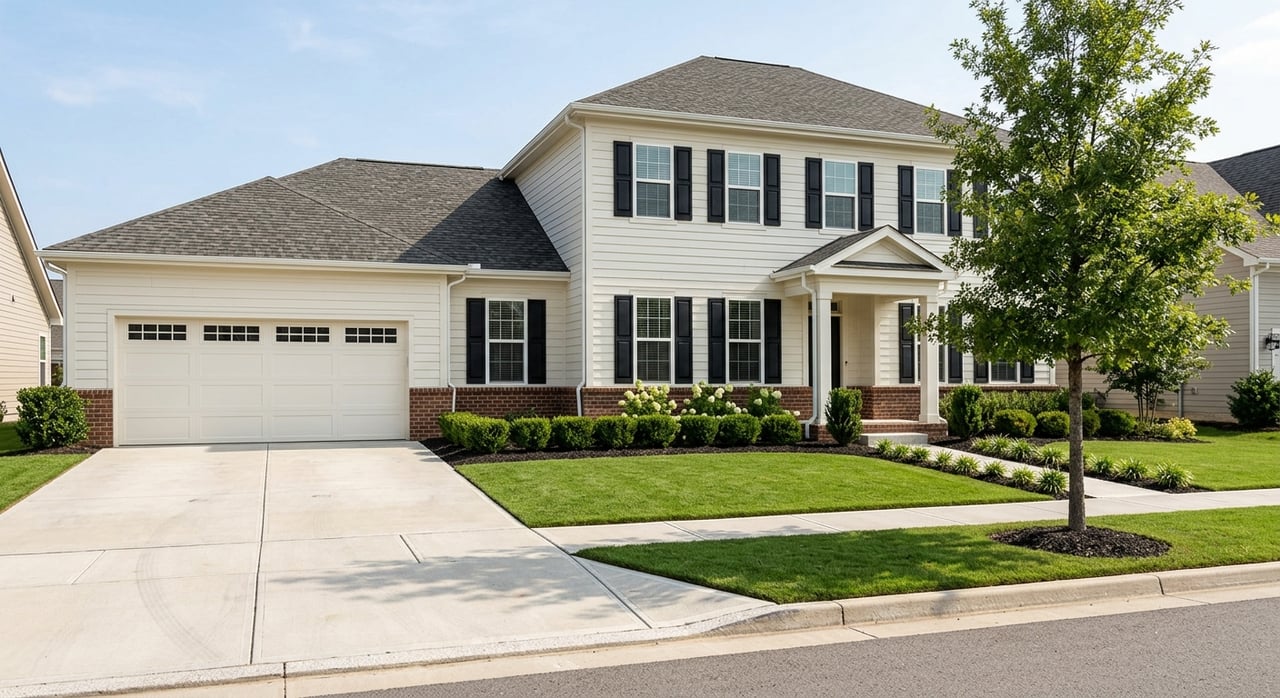
If you want a home that feels current from day one, Lakeland deserves a close look. For many buyers in the Memphis area, the appeal is simple: newer homes, more intentional neighborhood design, and community layouts that often include trails, open space, and shared amenities. In this guide, you’ll learn what “newer neighborhoods” and “master-planned living” really mean in Lakeland, what tradeoffs to expect, and what to verify before you buy. Let’s dive in.
Why Lakeland attracts buyers seeking newer homes
Lakeland stands out because growth here has been shaped by city planning, not just lot-by-lot expansion. The city’s comprehensive plan guides land use, transportation, parks and recreation, and natural resources, while local development regulations address subdivision design, zoning, utilities, and tree management. The Highway 70 Corridor Study also reflects a long-term focus on safety, mobility, and future growth.
That planning backdrop matters if you are looking for a neighborhood that feels cohesive and thoughtfully built. Lakeland’s housing stock is also relatively new compared with many nearby suburbs. A Census-based demographic profile places the city’s median home construction year at 2000, with 7% of homes built in 2020 or later and 28.3% built from 2000 to 2009.
The city has also seen substantial residential growth in recent years. Lakeland’s FY2023 Annual Comprehensive Financial Report states that nearly 3,000 housing units were constructed and or approved during the past decade. Census QuickFacts also reports a 79.2% owner-occupied housing rate and a median owner-occupied home value of $388,900 for 2020 through 2024.
What master-planned living means in Lakeland
In Lakeland, master-planned living usually goes beyond a standard subdivision layout. City documents describe the planned-development process as a way to allow more flexibility in exchange for higher design standards, stronger visual consistency, and more aesthetic common amenities. In practical terms, that can mean open-space preservation, coordinated design, architectural review, and phased development.
For you as a buyer, that often translates into a neighborhood with a stronger overall identity. Instead of focusing only on individual lots, these communities may be designed around shared spaces, natural features, and a more unified long-term vision. That can shape everything from the streetscape to how future phases are added.
Conservation-focused neighborhood design
One local example is The Grove at Lakeland, which was established in 2009 as the city’s first conservation development. Nearly half of the project land was placed in conservation easement, and the community includes wooded surroundings, walking trails, a pond, and 124 homes. Home sizes there are described as ranging from about 2,700 to more than 6,000 square feet.
Arcadia offers another example of how Lakeland approaches newer residential development. The city-approved plan for this 114.187-acre planned residential development states that more than 51% of the land is common open space. Existing lake and stream features were incorporated into the design and conserved with buffers.
Mixed-use planning and phased growth
Lakeland’s newer planning story is not limited to single-family neighborhoods. The Lake District, a 160-acre planned mixed-use development at I-40 and Canada Road, was proposed with single-family lots, multifamily units, age-restricted multifamily units, open space, and office and commercial uses. City materials note that the planned-development process was intended to support stronger design standards and more aesthetic amenities.
Lakeland Commons is another example at Highway 70 and Seed Tick Road. Development conditions describe a town-center environment with office and multifamily residential uses, a unified design theme, and architectural review of site plans, elevations, landscaping, and materials. If you are considering a home near a developing area, these kinds of plans can help you understand how the surrounding area may evolve over time.
Common amenities in newer Lakeland communities
Many buyers are drawn to Lakeland because newer neighborhoods often connect to a broader lifestyle-oriented setting. Common features in these communities can include trails, ponds or lakes, shared open space, and recreation areas built into the development plan. In Lakeland, parkland is often part of the planning process rather than an afterthought.
The city’s public park system supports that appeal. International Harvester Managerial Park includes 2.8 miles of walking, hiking, and mountain biking trails around a five-acre fishing lake. Brody Townsend Athletic Complex opened in 2022 on a 100-acre site, while Windward Slopes Park includes a paved trail, playground, and tennis courts.
Oak Ridge Park is another example of how development and public recreation can connect. It was created from subdivision parkland dedication associated with Heron’s Ridge and Oakwood. That reflects how neighborhood development regulations in Lakeland address parkland dedication and open-space requirements as part of the overall growth framework.
The tradeoffs of master-planned living
Planned communities can offer convenience, visual consistency, and shared amenities, but they also come with ongoing obligations. In many organized communities, HOA dues help cover landscaping, maintenance, and shared services. Those dues are separate from your mortgage and should be part of your monthly budget from the start.
Your total housing cost also includes more than the purchase price. When you evaluate affordability, it is smart to consider property taxes, homeowners insurance, utilities, maintenance, and any HOA fees together. A newer home may reduce some near-term replacement risks, but it does not remove the need for careful budgeting.
There can also be community rules that affect how you use and maintain your property. In some planned developments, buyers may need to follow architectural guidelines, approval processes, or property-use standards. These rules are not necessarily a negative, but they should be understood before you make an offer.
New construction benefits to consider
One reason buyers focus on newer Lakeland neighborhoods is the appeal of more modern construction. Newer homes may include updated systems, more current floor plans, and construction details that feel more move-in ready. That can be especially appealing if you want to reduce the likelihood of immediate repair or replacement projects.
Energy performance may also be part of the conversation. ENERGY STAR states that certified new homes are at least 10% more efficient than code-minimum homes and may include better insulation, high-performance windows, air sealing, and high-efficiency HVAC systems. If energy efficiency matters to you, it is worth asking whether a specific property includes any verified performance features.
Stormwater planning is another local point to keep in mind in Lakeland. The city formally reviews stormwater considerations for new development and redevelopment, which is especially relevant in neighborhoods built around lakes, drainage features, and open space. If a home backs to water or natural drainage areas, that context is important during your due diligence.
How Lakeland compares with nearby suburbs
If your home search includes other Memphis-area suburbs, Lakeland often stands out as a newer option. Census-based housing-age profiles place Lakeland’s median construction year at 2000, compared with 1992 in Bartlett and 1972 in Millington. That does not make one area better than another, but it does show that Lakeland tends to offer a newer housing mix.
That difference can matter if you are prioritizing contemporary layouts, newer systems, and communities designed with open space or planned amenities. By contrast, older nearby suburbs may offer a wider range of home ages and neighborhood styles. Your best fit depends on whether you value newer construction, lower-maintenance expectations, or a more established housing inventory.
Pricing also reflects some of that difference. Census QuickFacts reports median owner-occupied home values of $388,900 in Lakeland, $310,400 in Bartlett, and $207,300 in Millington for 2020 through 2024. Lakeland’s owner-occupied rate was reported at 79.2%, compared with 85.6% in Bartlett and 60.4% in Millington.
What to verify before buying in a newer Lakeland neighborhood
Before you buy in a newer or master-planned community, it helps to ask a few focused questions. The goal is not just to like the home today, but to understand the full cost, rules, and future setting of the neighborhood. That is especially important in communities with phased development.
Review fees and governing documents
Start by confirming whether there is an HOA and what the dues cover. Ask for the community covenants, any architectural rules, and details about reserve funding if available. You will want to understand both the monthly cost and the expectations attached to ownership.
Ask about future buildout
Some Lakeland communities and mixed-use areas are designed in phases. That means the neighborhood around a home may continue changing after you move in. Ask whether the community is still in a buildout phase and what additional residential, commercial, or amenity components are planned.
Understand maintenance responsibilities
Newer does not always mean maintenance-free. Clarify which items are handled by the HOA, which are your responsibility, and how common areas are maintained over time. This is especially helpful in communities with landscaped entrances, ponds, trails, or shared open spaces.
Look beyond the home itself
A beautiful house is only one piece of the decision. You should also consider utilities, insurance costs, drainage patterns, and how the neighborhood layout fits your daily routine. In Lakeland, where open space and water features are often part of the design, that wider view matters.
Why local guidance matters in Lakeland
Lakeland’s newer neighborhoods are not all built the same way. Some emphasize conservation design and natural features, while others are tied to larger mixed-use plans or phased growth areas. The details can affect your budget, your long-term expectations, and how a neighborhood feels over time.
That is where local neighborhood insight can make your search easier. When you understand how Lakeland’s newer communities compare with each other, and with nearby suburbs like Bartlett or Millington, you can make a more confident decision based on fit rather than guesswork.
If you are exploring newer neighborhoods in Lakeland or trying to compare planned communities across the Memphis suburbs, Kevin & Alli Clark - The Clark Team can help you sort through the options with practical local guidance.
FAQs
What makes Lakeland, TN appealing for newer construction homes?
- Lakeland has a relatively new housing stock, with a median construction year of 2000, and city planning that emphasizes managed growth, open space, and coordinated development.
What does master-planned living in Lakeland, TN usually include?
- In Lakeland, master-planned living often includes conservation-minded design, shared open space, trails, lakes or ponds, architectural review, and in some areas a mix of residential and commercial uses.
What should you check before buying in a Lakeland master-planned community?
- You should verify HOA dues, covenants, architectural rules, reserve funding, amenity costs, maintenance responsibilities, and whether the neighborhood is still being built in phases.
How does Lakeland compare with Bartlett and Millington for newer homes?
- Census-based housing-age data suggests Lakeland has a newer housing mix, with a median construction year of 2000 compared with 1992 in Bartlett and 1972 in Millington.
Do newer Lakeland neighborhoods always mean lower ownership costs?
- Not always. A newer home may reduce some near-term repair needs, but you still need to budget for taxes, insurance, utilities, maintenance, and any HOA fees.